

Born On Third Base
Small towns shelter their children. The results are more positive than we admit.

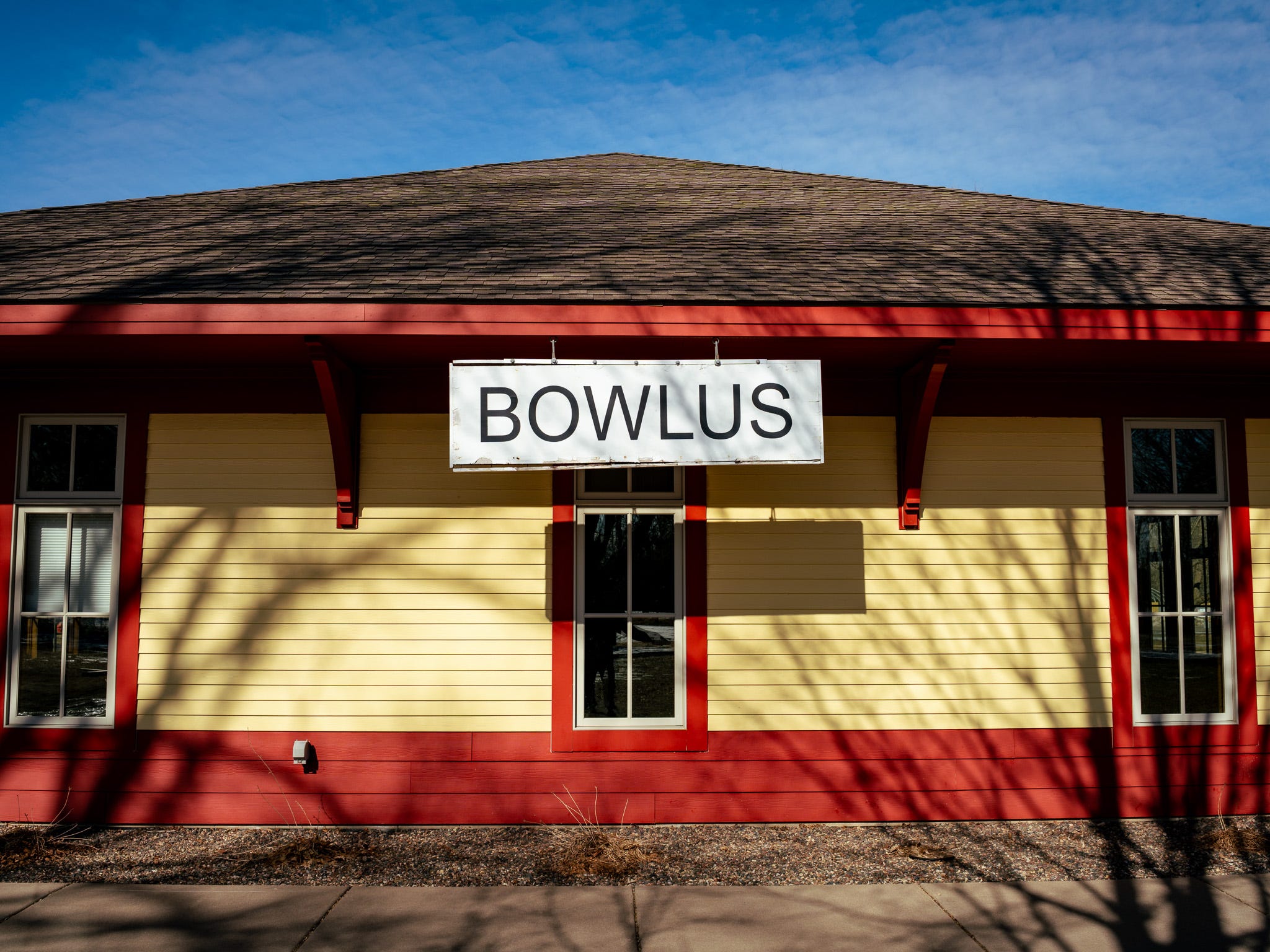
I try to see each town as its own place.
Different name, different story, different people with different memories. I photograph the unique details. The specific color of a church steeple. The particular way someone painted their community center. The grain elevator that marks this town and not another.
But after ten or more towns, the truth becomes hard for me to ignore.
They’re built from what looks like a common template. Sewn together with a McCall’s pattern.
Not because the people lack imagination beyond their borders. Not because I’m victim of stereotyping. But because there’s a model for what a safe place looks like when you have the community willpower to build one. A welcome sign at the edge of town that tells visitors where they are and what to expect. A church steeple, the tallest point for miles. Often two or three churches, depending on how many blocks deep the town runs. A post office. A grocery store. A laundromat. Sometimes a Laundromat in a grocery store. A bar or two. An American Legion hall. A community center. A ballpark. A playground with a spring horse and a tire swing. Flags everywhere. Tributes to veterans. Christian symbols marking the moral order. Where Jesus looks more like the local Scandinavians than one from Nazareth.
One or two public schools. Well-built to best any tornado or blizzard. Maybe a working class parochial school for the Germanic devout.
A firehouse built in the 1800s, still standing.
Together, these elements form something I didn’t expect to recognize when I started this work. They form a controlled environment. A movie set for a particular kind of childhood.
And that’s where it gets complicated for me.
I could dismiss this as sheltered. Provincial. A way of life that robs children of exposure to diversity, that produces adults incapable of understanding anyone who grew up differently. That would be the easy metropolitan take. Big city arrogance looking down on little people and their quaint customs.
But I’m here looking at playgrounds where kids can wander freely. Some of them bike past me with smiles, childish curiosity, and an watchful interest in an odd traveler. Otherwise, the streets quiet enough that a parent doesn’t worry when their child ventures out of sight. It’s encouraged. Green space in every direction. Clean sidewalks. A town small enough that every adult knows whose kid is whose. Where all roads lead to a park, a school, a shared gathering place.
This is designed space. Not accidental. Not natural. Designed for children to grow with a certain kind of freedom.
The chaos of cities is absent here. The random violence. The deprivation. The instability that interrupts childhood before it’s finished. Kids here get to explore autonomously without navigating around danger. They get lawns and clean air and a pace slow enough to hear themselves think.
I’m not romanticizing it. Small towns have their darkness. Alcoholism. Family secrets. Abuse behind closed doors. Gossip that ruins people. Exclusion that feels like exile.
But the idea matters.
You can build a place where childhood has room to unfold. Where safety is unquestioned. Where a kid can become themselves with minimal interference from the worst things humans do to each other.
The people who grow up here often carry a particular pride. They believe in self-reliance. Hard work. Responsibility. They point to their lives as evidence that if you do things right, you succeed.
What they can’t always see is that they were born inside a carefully constructed advantage.
They grew up on third base but learned the story of hitting a triple.
The word “freedom” is everywhere in these towns. On trucks. On business signs. On T-shirts and flags and bar names. And in a sense, they’re right. They had freedom. The freedom that comes from living in a place designed to give children the best possible start.
But that same design creates distance from everyone who didn’t get that start.
If you grow up where the streets are safe and the schools are stable and the future feels predictable, it becomes nearly impossible to understand what it’s like to grow up where none of those things are true. Where income inequality shapes every choice. Where marginalization is inherited. Where segregation along lines of race and class creates environments that don’t protect children, they endanger them.
The distance isn’t just geographic. It’s empathetic.
These towns were engineered not just for the freedom of the children inside them, but also for their separation from the children outside them. And that separation makes it easy to believe in a hierarchy. Easy to think that success is always earned and failure is always deserved.


I’m thinking about this as someone who works on child justice. On what children need to grow, learn, and thrive. On how much power they have over their own lives and futures.
If I could wave a wand, would I give every child access to what these towns provide? The safety, the space, the stability? Yes.
But I can’t ignore what else these towns provide. The myth of meritocracy. The comfort of insularity. The freedom that comes from never having to reckon with what your freedom costs someone else.
I don’t have an answer. Just photos of a spring horse in an empty playground under a blue sky. A tire swing waiting for a kid who will grow up here, in a place that was built for them before they were born.
A place they’ll remember as normal. As earned. As the way things naturally are.
When really, it was always a choice made by an invisible ancestor no one can name. Someone decided to build this. Someone had the power to construct an environment where children could be safe.
The question I can’t stop asking is why we only built it in some places.
[Shot with Leica Q3 and Sony A7R V, somewhere built for certain children, winter 2026]
agree COMPLETELY Christopher. Thanks as always for the poignant, thoughtful, multi-layered viewpoints you provide, the hard and thoughtful questions you raise, and the perspectives you share.