

Ghostbuster
Not all hauntings are bad. Some are from people giving us clues of how to live better.

This weekend I ended up at the Palmer Hotel in Sauk Centre. It wasn’t planned. I was in town tracing the footsteps of Sinclair Lewis, the Nobel Prize-winning author who grew up a few blocks away, and I saw this beautiful old building that demanded a closer look.
The Palmer Hotel is 125 years old. Twenty rooms. A little diner. A night tavern. And a living room that feels more like an antique museum, filled with artifacts from another era. Call me nosey or curious, I just love a place that has more stories than I can capture.
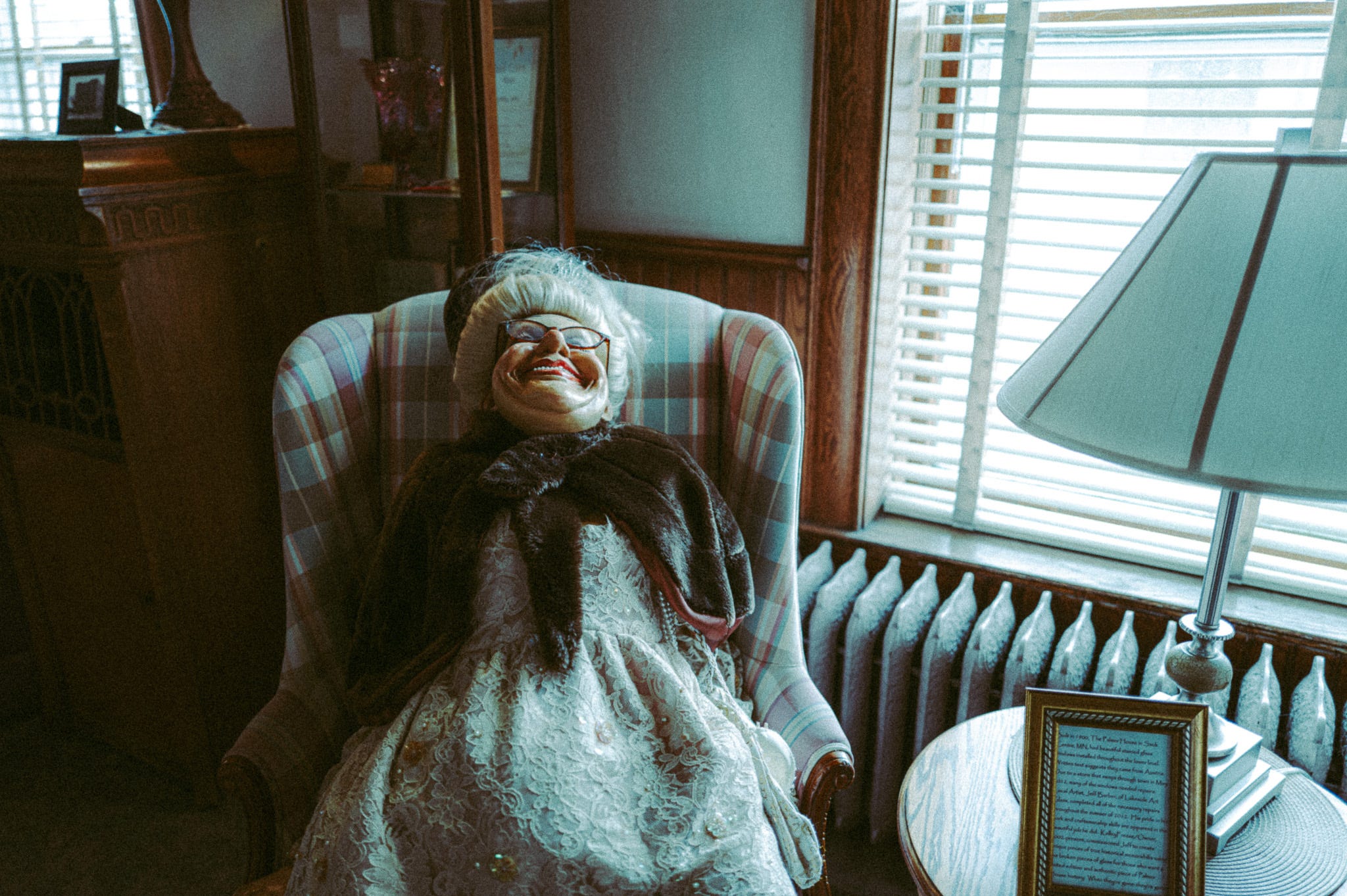
As I jumped from picture to figurine to framed document, making my way through the time capsule, I came to a life-sized doll of an old woman sitting in a chair by the window.
Her smile was unsettling in that way old dolls always are. Scared the bejeezus out of me.
Usually, when I say a place is haunted, I’m mostly joking. Mostly. But there’s something about old hotels like this one that gives me the piss shivers. The creaking floors. The weight of all those years. The fact that thousands of people have passed through these rooms, leaving behind pieces of themselves I feel without seeing.
I was photographing the space when I saw a binder on the table. It invited guests to record any paranormal experiences during their stay.
I’m not here for that. It was better when the haunting was a personal joke.
But, the thing about walking into unfamiliar places is that the unease I feel is just atmosphere. Old buildings. My imagination running fast.
Other times it’s real. Sometimes I’m walk into a small town and feel watched. Sometimes the flags make it clear exactly who’s welcome and who’s not. Sometimes the paranormal I’m sensing is just the very normal danger of being in a place that wasn’t designed for me.
I’m aware of Emmet Till’s mother demanding his casket be open so the world could see what evils are possible.
I’ve always trusted my gut on these things. But I’ve also learned that if I only went where I felt immediately safe, I’d miss most of the story.
Knowing it or not, I was in fact ghost hunting. I came to Sauk Centre looking for clues of Lewis’ impact here. I didn’t know until after I’d already decided the Palmer House had ghosts that Lewis worked the front desk here for two summers as a young man.


That was a plot twist. The haunting felt different. Not eerie, but curious. Significant.
Lewis was a boy in Sauk Centre when his mother died. His father was gruff in the aftermath. The town’s Main Street became the Main Street he wrote about in his novels, the one that made him famous for seeing small-town America clearly. The conformity. The insularity. The gap between what these places promised and what they delivered.
Lewis was looking from the inside out. He lived here. He globalized what he learned from living among these people.
I’m doing the opposite. I’m looking from the outside in.
I come to these towns regularly, camera in hand, trying to understand people whose politics I find troubling. The MAGA flags. The racism that’s harder to miss the longer you stay. It would be easier to stereotype from a distance, to make them the enemy and move on. But that’s a luxury I’m trying not to afford myself anymore.
This journey is self-education. It’s about reclaiming my own humanity by refusing to deny theirs. Even when it’s hard. Even when some of the stereotypes turn out to be true.
Some of these towns do have a certain “hills have eyes” quality. Some of them feel exactly like the sundown towns we suspect them to be.
Lewis, my teacher long dead, a man who gave his life to letters, taught me something without knowing it. You have to show up. You have to look. Not to excuse what’s wrong, but to see what’s actually there. The good and the bad. The grace and the meanness. The people trying and the people who gave up.
His mark is all over Sauk Centre. Streets named after him. Artwork referencing his characters. A legacy that refuses to fade.
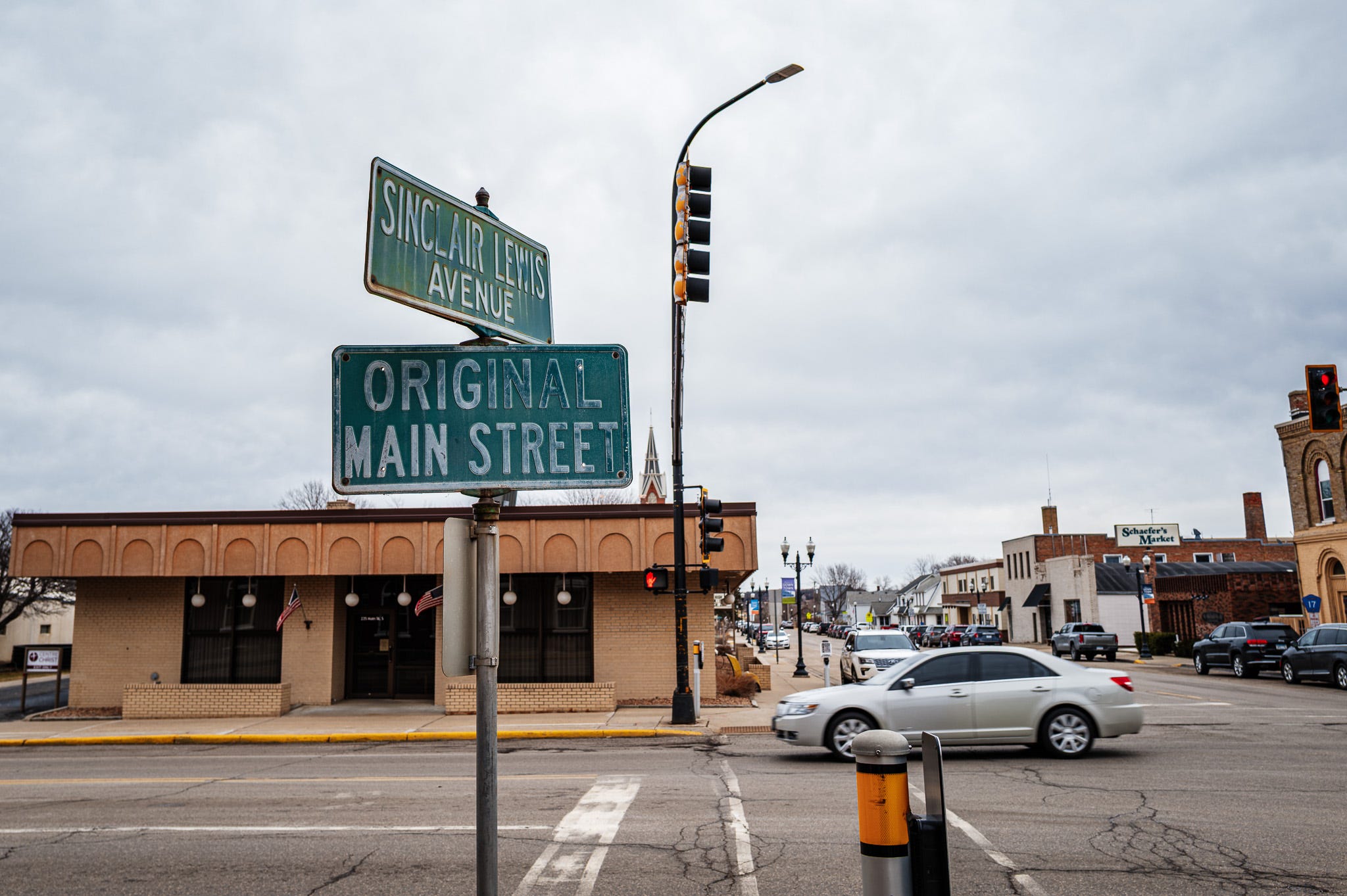
The fact that Sauk Centre honors the man who told hard truths about it gives me hope. It means a place can grow. It means critique doesn’t have to be exile. It means maybe, just maybe, seeing clearly and staying connected aren’t mutually exclusive.
That’s the kind of haunting I’m looking for. Not the paranormal kind, but the kind where a life well-lived leaves traces for others to follow. Where a writer’s observations about a place become part of the place itself. Where the place hopefully improves from the mirror placed before it.
My search for Lewis was rewarded, but not in the way I expected. I found a hotel that held him for two summers. A Main Street that shaped his imagination. A community that still honors what he gave back.
I also found a reminder of why this work matters.
These towns aren’t simple. They’re not all good or all bad. They’re complicated in the way people are complicated. Some of them will surprise you with grace. Some of them will confirm your worst fears. Most of them will do both.
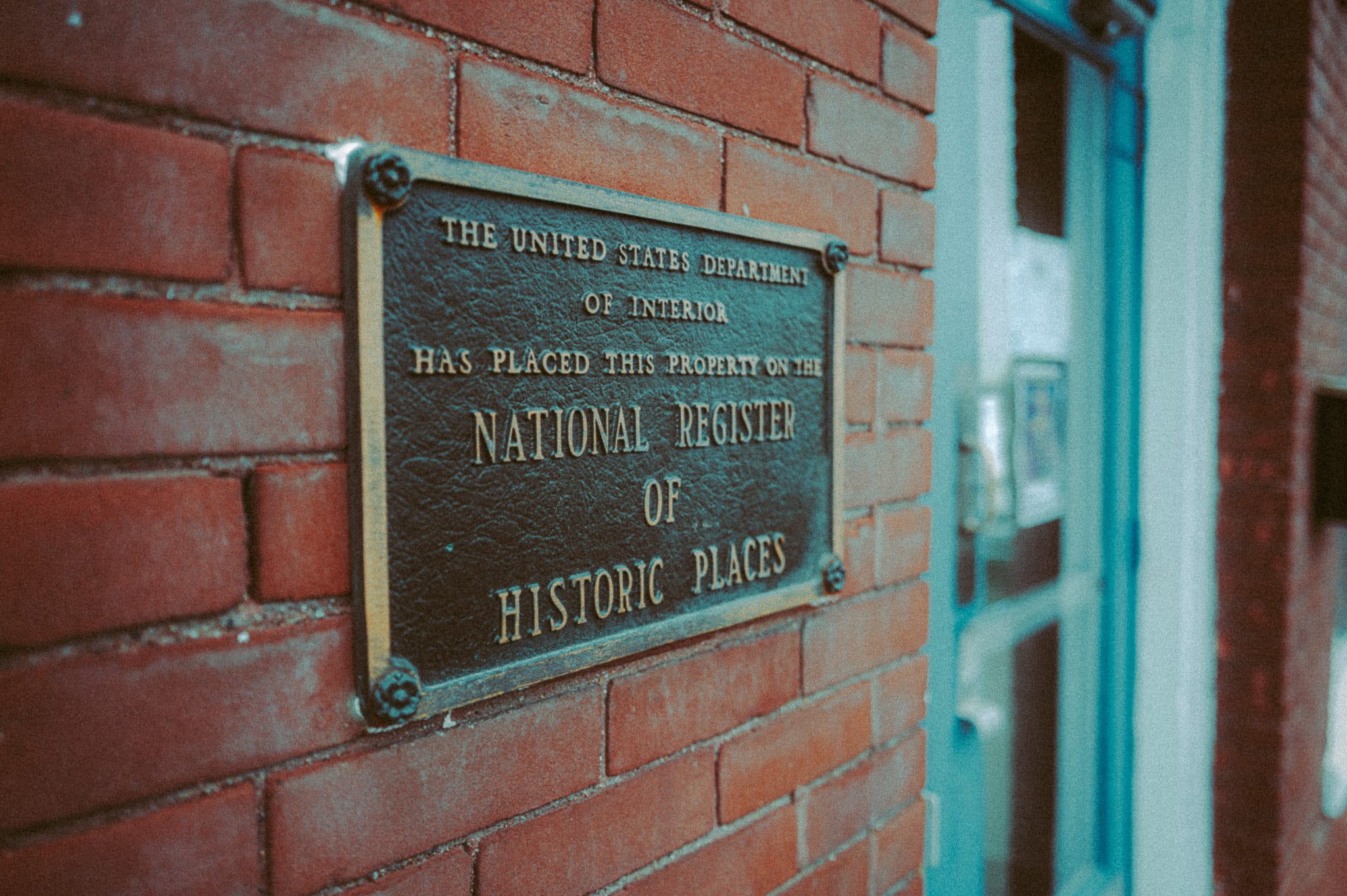
The Palmer Hotel is charming. Historic. Beautifully preserved. And yes, maybe a little haunted.
But the best ghosts are the ones that remind you that an examined life is superior to a careless one. That looking clearly matters. That refusing the luxury of easy answers matters.
Lewis looked from the inside out and told the truth about what he saw.
I’m looking from the outside in, trying to do the same.
That’s the kind of legacy worth believing in.
Seems less Ghostbusters and more Poltergeist....